The AI Wave: Why Riding It Beats Swimming Against It

Rahman Hanafi
Remember when ChatGPT was just that cool new thing everyone was talking about?
That was barely yesterday, and yet here we are, watching AI chatbots transform from party tricks into powerful productivity partners. But this isn't just another story about AI tools - it's about understanding why staying on the shore isn't an option anymore.
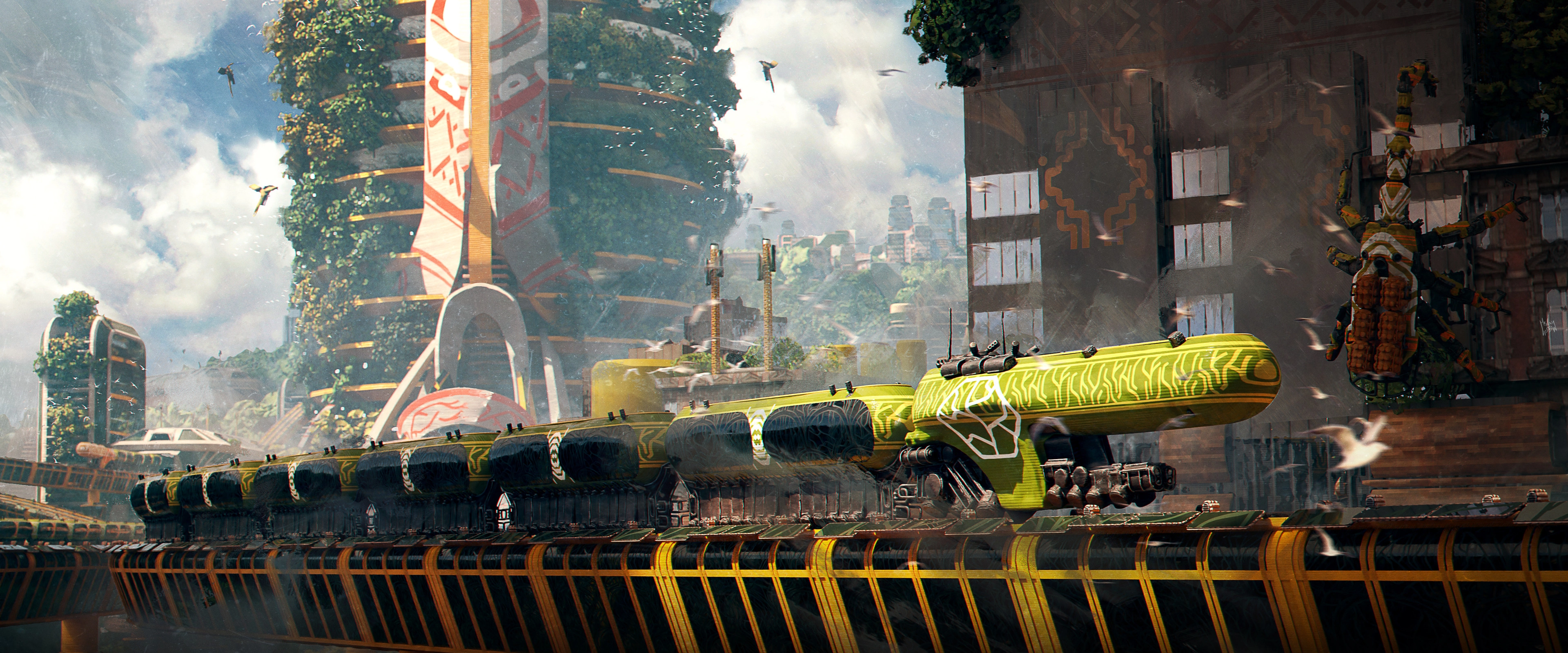
Artwork by Felix Riaño - Waterlogged City
The Pattern We Keep Missing
History has a delightful way of repeating itself, especially when it comes to technological adoption. Remember the skepticism when email first arrived? "Why would I need this when I have a perfectly good fax machine?" Fast forward to today, and trying to function in the professional world without email would be like trying to swim the English Channel in water wings - well technically possible, but bruh… are you that unemployed friend on Tuesday?
The same pattern is unfolding with AI chatbots. What started as a novelty - "Hey, look what this thing can do!" nowadays has quietly become an integral part of our workflow ecosystem. Just as societies historically followed their leaders' technological adoptions (think like the printing press in medieval Europe), we're witnessing a similar cascade effect with AI tools. The early adopters blazed the trail, and now we're all realizing these tools aren't just nice to have; they're becoming essential for staying competitive.
The Quiet Revolution
The transformation has been subtle yet profound. What we're witnessing isn't just another technological shift; it's a fundamental change in how we approach our daily work and creative processes. Gone are the days of staring at blank pages for hours or drowning in endless browser tabs during research. We should know that professionals across industries are discovering that AI can handle the heavy lifting of initial drafts and basic research, freeing their minds for more strategic thinking and creative innovation.
This isn't about replacing human thought; it's about eliminating the mundane tasks that drain our creative energy. Think of how many hours we spend on repetitive tasks that could be better invested in deep thinking and innovation. The real revolution isn't in the technology itself, but in how it's freeing our minds to focus on what truly matters.
What makes this technological wave different is its democratizing effect. Unlike previous innovations that required massive infrastructure or technical expertise, AI tools are increasingly accessible to anyone with an internet connection and for those who have a powerful machine to run an AI model locally. This accessibility is creating a new kind of digital divide, not between those who have access to technology and those who don't, but between those who embrace these tools and those who resist them.
The implications of this shift are profound. We're seeing a redistribution of productivity potential that's unprecedented in its scope and speed. Small businesses can now compete with larger corporations in terms of output and efficiency, and individual creators can literally produce content at a scale that was previously possible only with a full team. The playing field isn't just being leveled; it's being completely reimagined.
The Human Element
Let's be clear: this isn't about surrendering our humanity to machines. If anything, the rise of AI is highlighting what makes us uniquely human - our creativity, our emotional intelligence, our ability to think critically and make nuanced judgments. The most successful adopters of AI technology aren't those who use it to replace human thought, but those who use it to amplify human capabilities.
The real game changer isn't the technology itself; it's the mindset shift it enables. When we're freed from the burden of routine tasks, we can focus on higher-level thinking, innovation, and the kind of creative problem solving that machines still can't match. We can even have more time with our friends, family, and the one we love. This isn't about artificial intelligence replacing human intelligence; it's about artificial intelligence enhancing human potential.
I think the future isn't about choosing between human and artificial intelligence, but rather about finding the sweet spot where they complement each other. As AI continues to evolve, those who learn to dance with it rather than fight against it will find themselves at a significant advantage. The question isn't whether AI will impact your field; it's how quickly and dramatically it will transform it.
The AI wave isn't coming, cause it is… already here. Those who resist this change aren't just missing out on productivity gains; they're potentially setting themselves up for obsolescence in an increasingly AI-augmented world. But this isn't just my doom-and-gloom prediction; it's an invitation to embrace a future where technology amplifies rather than replaces human potential.
After all, in a world where everyone else is using AI to accelerate their work and enhance their capabilities, can you afford to be the one standing still?